Top 10 Open-Source RAG Frameworks you need!! 🧌

I am a developer, writer and open-source lover
The capabilities of Large Language Models (LLMs) are enhanced by Retrieval-Augmented Generation (RAG). Thus, RAG comes up with a super powerful technique that distinguishes it from others.
RAG Frameworks are tools and libraries that help developers build AI models that can retrieve relevant information from external sources (like databases or documents) and generate better responses based on that information.
RAG and it’s Flowchart 🎴
Imagine you have a big toy box filled with all your favorite toys. But sometimes, when you want to find your favorite teddy bear, it takes a long time because the toys are all mixed up.
Now, think of RAG (Retrieval-Augmented Generation) as a magical helper. This helper is really smart! When you ask, “Where is my teddy bear?”, it quickly looks through the toy box, finds the teddy bear, and gives it to you right away.
In the same way, when you ask a computer a question, RAG helps it find the right information from a big book before giving you an answer. So instead of just guessing, it finds the best answer from the book and tells you! 😊
RAG = RetrievalBasedSystem + GenerativeModels
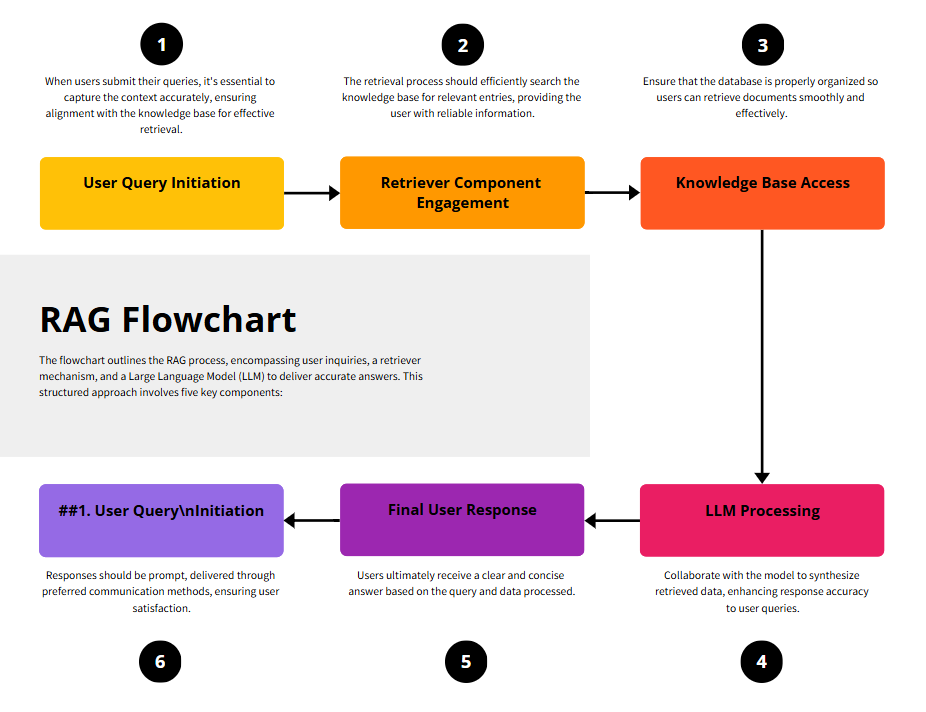
Flowchart
How RAG Frameworks Work ⚒️
Retrieve → Search for relevant documents using a vector database.
Augment → Feed those documents into the LLM as extra context.
Generate → The LLM generates an informed response using both retrieved data and its own training knowledge.
Example
🔹 Step 1: User Question Example: “Who discovered gravity?”
🔹 Step 2: Retrieve Relevant Information Searches a knowledge base (e.g., Wikipedia, company documents) Finds: “Isaac Newton formulated the law of gravity in 1687.”
🔹 Step 3: Augment & Generate Answer The LLM takes the retrieved information + its own knowledge Generates a complete, well-structured response
🔹 Step 4: Final Answer Example: “Gravity was discovered by Isaac Newton in 1687.”
I hope now you’re somewhat clear with the Rag concept. Now, in this blog, we will be discussing the top 10 Open-Source RAG frameworks that will help you boost your project or enterprise.
Top 10 Open-Source RAG Frameworks you need!! 📃
Here’s a curated list of some famous and widely used RAG frameworks, you might not want to miss:
1️⃣ LLMWare.ai
11K Github Stars, 1.8K Forks
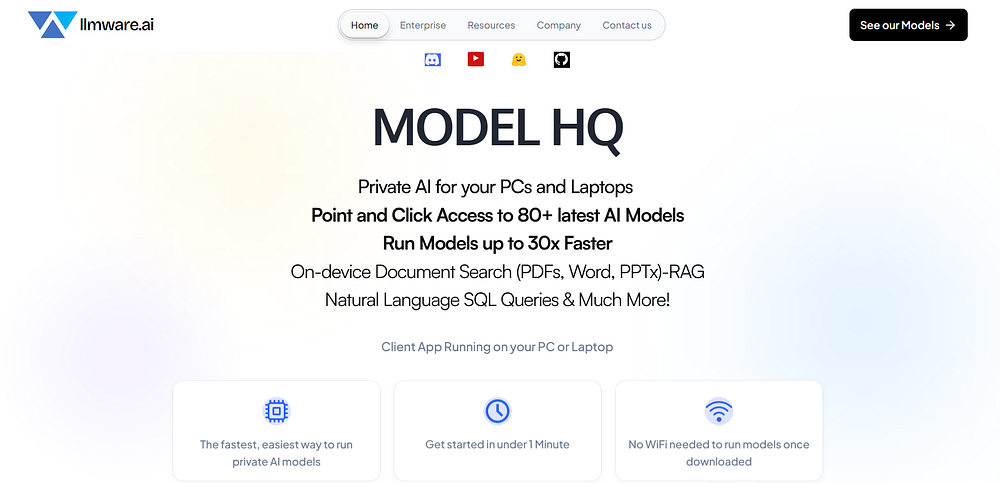
LLMWare.ai: https://llmware.ai
LLMWare provides a unified framework for building LLM-based applications (e.g., RAG, Agents), using small, specialized models that can be deployed privately, integrated with enterprise knowledge sources safely and securely, and cost-effectively tuned and adapted for any business process.
Core Features
RAG support for enterprise-level AI apps.
LLM Orchestration — Connects multiple LLMs (OpenAI, Anthropic, Google, etc.).
Document Processing & Embeddings — Enables structured AI-driven search.
Vector Database Integration — Works with Pinecone, ChromaDB, Weaviate, etc.
Custom Fine-Tuning — Train models on private datasets.
🔹Use Cases
Chatbots & virtual assistants
AI-driven search and retrieval
Summarization & text analysis
Enterprise knowledge management
Financial Analysis
Why LLMWare.ai?
Faster AI development with pre-built tools
Scalable & flexible for enterprise applications
Open-source & extensible
Star LLMWare on GitHub ⭐: https:/github.com/llmware-ai/llmware
LLMWare Discord Server 💬: https://discord.gg/bphreFK4NJ
2️⃣ LlamaIndex (Formerly GPT Index)
39.8K Github Stars, 5.7K Forks
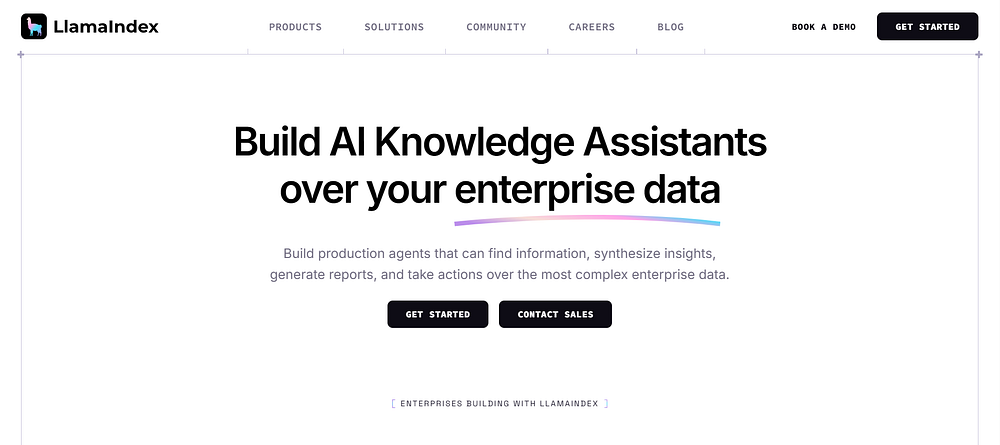
LlamaIndex: https://www.llamaindex.ai
LlamaIndex (GPT Index) is a data framework for your LLM application. Building with LlamaIndex typically involves working with LlamaIndex core and a chosen set of integrations (or plugins).
Core Features
Indexing & Retrieval — Organizes data efficiently for fast lookups.
Modular Pipelines — Customizable components for RAG workflows.
Multiple Data Sources — Supports PDFs, SQL, APIs, and more.
Vector Store Integrations — Works with Pinecone, FAISS, ChromaDB.
🔹Use Cases
AI-powered search engines
Knowledge retrieval for chatbots
Code and document understanding
Why LlamaIndex?
Easy to integrate with OpenAI, LangChain, etc.
Highly flexible & modular for different AI tasks.
Supports structured & unstructured data.
Star LlamaIndex on GitHub ⭐: https://github.com/run-llama/llama_index
LlamaIndex Discord Server 💬: https://discord.com/invite/eN6D2HQ4aX
3️⃣ Haystack (by deepset AI)
19.7K Github Stars, 2.1K Forks
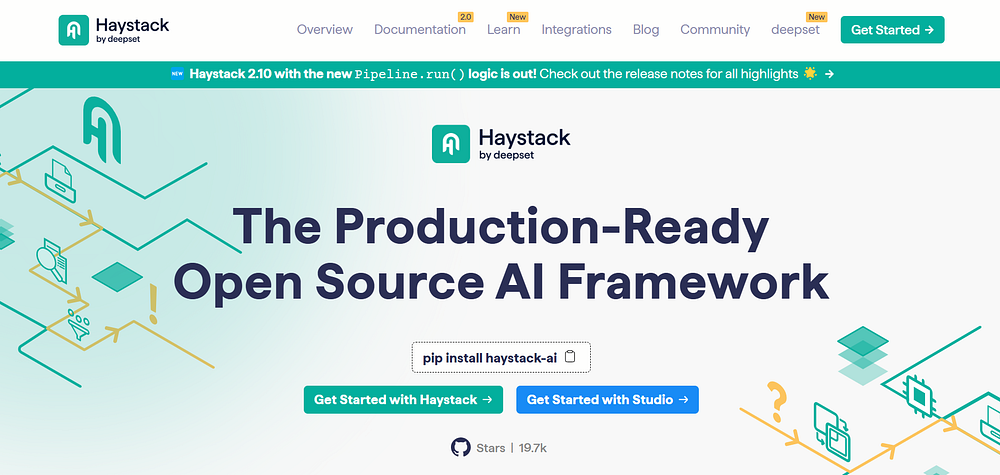
Haystack: https://haystack.deepset.ai
Haystack is an end-to-end LLM framework that allows you to build applications powered by LLMs, Transformer models, vector search and more. Whether you want to perform retrieval-augmented generation (RAG), document search, question answering or answer generation, Haystack can orchestrate state-of-the-art embedding models and LLMs into pipelines to build end-to-end NLP applications and solve your use case.
Core Features
Retrieval & Augmentation — Combines document search with LLMs.
Hybrid Search — Uses BM25, Dense Vectors, and Neural Retrieval.
Pre-built Pipelines — Modular approach for rapid development.
Integration Support — Works with Elasticsearch, OpenSearch, FAISS.
🔹Use Cases
AI-powered document Q&A
Context-aware virtual assistants
Scalable enterprise search
Why Haystack?
Optimized for production RAG applications.
Supports various retrievers & LLMs for flexibility.
Strong enterprise adoption & community.
Star Haystack on GitHub ⭐: https://github.com/deepset-ai/haystack
Haystack Discord Server 💬: https://discord.com/invite/xYvH6drSmA
4️⃣ Jina AI
21.4K Github Stars, 2.2K Forks (jina-ai/serve)
Jina AI: https://jina.ai/
Jina AI is an open-source MLOps and AI framework designed for neural search, generative AI, and multimodal applications. It enables developers to build scalable AI-powered search systems, chatbots, and RAG (Retrieval-Augmented Generation) applications efficiently.
Core Features
Neural Search — Uses deep learning for document retrieval.
Multi-modal Data Support — Works with text, images, audio.
Vector Database Integration — Built-in support for Jina Embeddings.
Cloud & On-Premise Support — Easily deployable on Kubernetes.
🔹Use Cases
AI-powered semantic search
Multi-modal search applications
Video, image, and text retrieval
Why Jina AI?
Fast & scalable for AI-driven search.
Supports multiple LLMs & vector stores.
Well-suited for both startups & enterprises.
Star Jina AI on GitHub ⭐: https://github.com/jina-ai/serve
Jina AI Discord Server 💬: https://discord.com/invite/AWXCCC6G2P
5️⃣ Cognita by truefoundry
3.9K Github Stars, 322 Forks
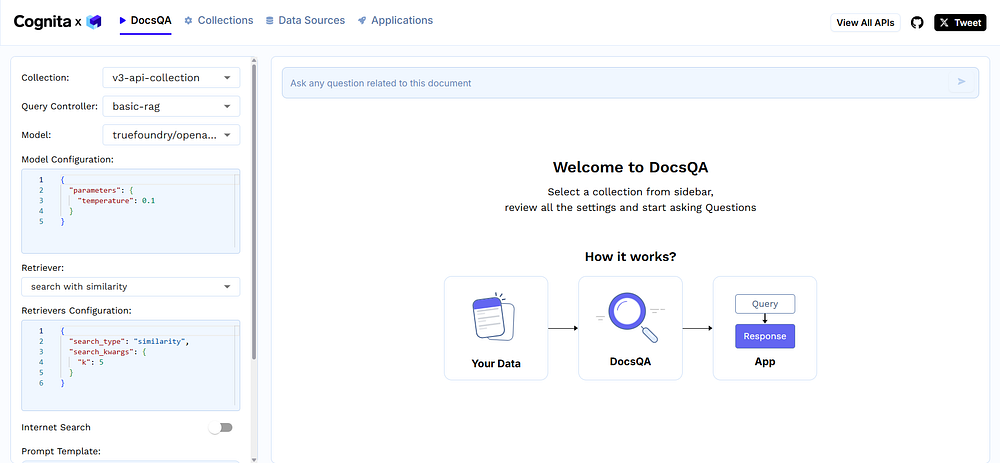
Cognita: https://cognita.truefoundry.com
Cognita addresses the challenges of deploying complex AI systems by offering a structured framework that balances customization with user-friendliness. Its modular design ensures that applications can evolve alongside technological advancements, providing long-term value and adaptability.
Core Features
Modular Architecture — Seven customizable components (data loaders, parsers, embedders, rerankers, vector databases, metadata store, query controllers).
Vector Database Support — Compatible with Qdrant, SingleStore, and other databases.
Customizability — Easily extend or swap components for different AI applications.
Scalability — Designed for enterprise use, supporting large datasets and real-time retrieval.
API-Driven — Seamless integration with existing AI pipelines.
🔹Use Cases
AI-powered Customer Support with real-time retrieval.
Enterprise Knowledge Management
Context-Aware AI Assistants
Why Cognita?
Open-source with modular design for custom RAG workflows.
Works with LangChain, LlamaIndex, and multiple vector stores.
Built for scalable and reliable AI solutions.
Star Cognita on GitHub ⭐: https://github.com/truefoundry/cognita
Cognita Slack Community 💬: https://truefoundry.slack.com/
6️⃣ RAGFlow by infiniflow
43.9K Github Stars, 3.9K Forks
RAGFlow: https://ragflow.io/
RAGFlow is an open-source Retrieval-Augmented Generation (RAG) engine developed by InfiniFlow, focusing on deep document understanding to enhance AI-driven question-answering systems.
Core Features
Deep Document Understanding: RAGFlow excels in processing complex, unstructured data formats, enabling accurate information extraction and retrieval.
Template-Based Chunking: It employs intelligent, explainable chunking methods with various templates to optimize data processing.
Integration with Infinity Database: RAGFlow seamlessly integrates with Infinity, an AI-native database optimized for dense and sparse vector searches, enhancing retrieval performance.
GraphRAG Support: The engine incorporates GraphRAG, enabling advanced retrieval-augmented generation capabilities.
Scalability: Designed to handle extensive datasets, RAGFlow is suitable for businesses of all sizes.
🔹Use Cases
Enterprise Knowledge Management
Legal Document Analysis
AI-Powered Customer Support
Medical Research
Financial Analysis
Why RAGFlow?
Deep Document Processing — Structures unstructured data for complex analysis.
Graph-Enhanced RAG — Uses graph-based retrieval for smarter responses.
Hybrid Search — Combines vector and keyword search for accuracy.
Enterprise Scalability — Handles large-scale AI search applications.
Star RAGFlow on GitHub ⭐: https://github.com/infiniflow/ragflow
RAGFlow Discord Server 💬: https://discord.com/invite/4XxujFgUN7
7️⃣ txtAI by NeuML
10.5K Github Stars, 669 Forks
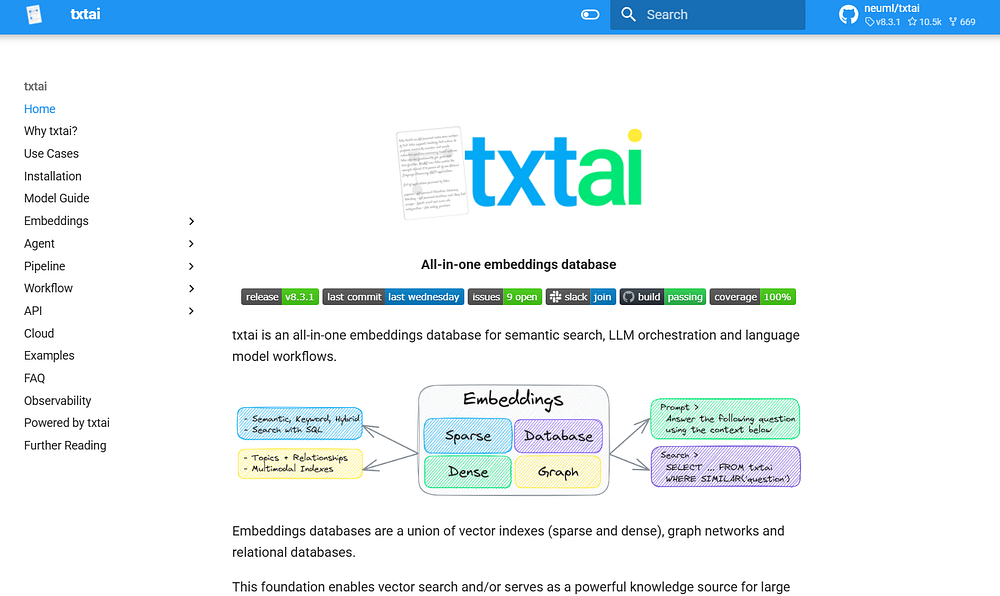
txtAI: https://neuml.github.io/txtai/
txtAI is an open-source AI-powered search engine and embeddings database, designed for semantic search, RAG, and document similarity.
Core Features
Embeddings Indexing — Stores and retrieves documents using vector-based search.
RAG Integration — Enhances LLM responses with retrieval-augmented generation.
Multi-Modal Support — Works with text, images, and audio embeddings.
Scalable & Lightweight — Runs on edge devices, local systems, and cloud.
APIs & Pipelines — Provides an API for text search, similarity, and question answering.
SQLite Backend — Uses SQLite-based vector storage for fast retrieval.
🔹Use Cases:
AI-Powered Semantic Search
Chatbot Augmentation
Content Recommendation
Automated Tagging & Classification
Why txtai?
Lightweight & Efficient — Runs on low-resource environments.
Versatile & Extendable — Works with any embeddings model.
Fast Retrieval — Optimized for local and cloud-scale deployments.
Star txtAI on GitHub ⭐: https://github.com/neuml/txtai
txtAI Slack Community 💬: https://txtai.slack.com
8️⃣ STORM by stanford-oval
23.2K Github Stars, 2K Forks
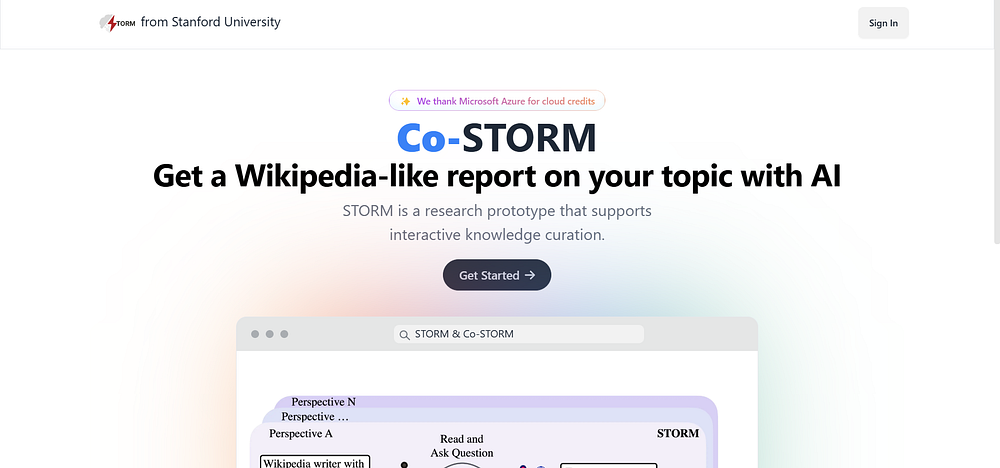
STORM: https://github.com/stanford-oval/storm
STORM is an AI-powered knowledge curation system developed by the Stanford Open Virtual Assistant Lab (OVAL). It automates the research process by generating comprehensive, citation-backed reports on various topics.
Core Features
Perspective-Guided Question Asking: STORM enhances the depth and breadth of information by generating questions from multiple perspectives, leading to more comprehensive research outcomes.
Simulated Conversations: The system simulates dialogues between a Wikipedia writer and a topic expert, grounded in internet sources, to refine its understanding and generate detailed reports.
Multi-Agent Collaboration: STORM employs a multi-agent system that simulates expert discussions, focusing on structured research and outline creation, and emphasizes proper citation and sourcing.
🔹Use Cases
Academic Research: Assists researchers in generating comprehensive literature reviews and summaries on specific topics.
Content Creation: Aids writers and journalists in producing well-researched articles with accurate citations.
Educational Tools: Serves as a resource for students and educators to quickly gather information on a wide range of subjects.
Why Choose STORM?
Automated In-Depth Research: STORM streamlines the process of gathering and synthesizing information, saving time and effort.
Comprehensive Reports: By considering multiple perspectives and simulating expert conversations, STORM delivers well-rounded and detailed reports.
Open-Source Accessibility: Being open-source, STORM allows for customization and integration into various workflows, making it a versatile tool for different users.
Star STORM on GitHub ⭐: https://github.com/stanford-oval/storm
9️⃣ LLM-App by pathwaycom
22.5K Github Stars, 379 Forks
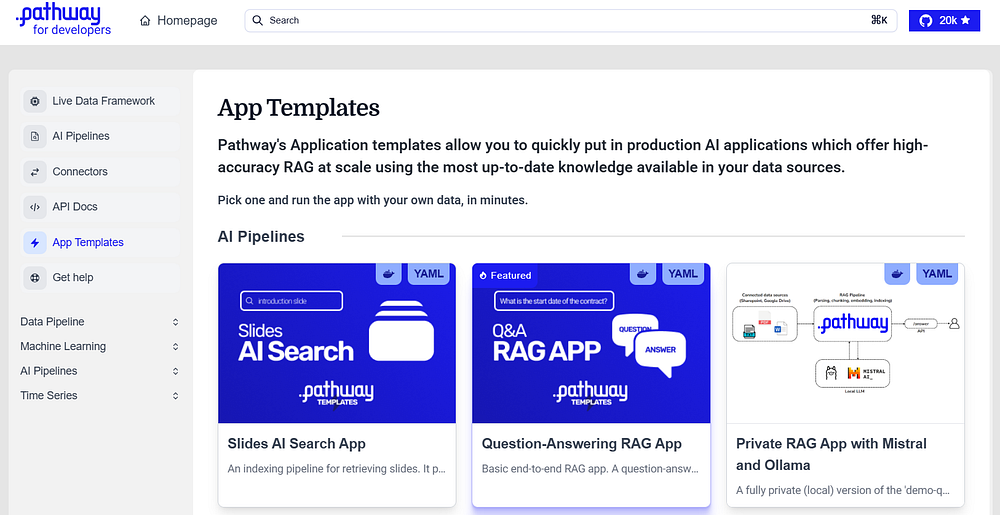
LLM-App: https://pathway.com/developers/templates/
LLM-App is an open-source framework developed by Pathway.com, designed to integrate Large Language Models (LLMs) into data processing workflows.
Core Features
Seamless LLM Integration: Allows for the incorporation of LLMs into various applications, enhancing data processing capabilities.
Real-Time Data Processing: Utilizes Pathway’s real-time data processing engine to handle dynamic data streams efficiently.
Extensibility: Designed to be adaptable, enabling users to customize and extend functionalities based on specific requirements.
🔹Use Cases
Data Analysis
Natural Language Processing (NLP)
Chatbots and Virtual Assistants
Why Choose LLM-App?
Integration with Pathway’s Engine: Combines the power of LLMs with Pathway’s robust data processing engine for efficient real-time applications.
Open-Source Flexibility: Being open-source, it allows for community contributions and customization to fit diverse use cases.
Scalability: Designed to handle large-scale data processing tasks, making it suitable for enterprise applications.
Star LLM-App on GitHub ⭐: https://github.com/pathwaycom/llm-app
LLM-App Discord Server 💬: https://discord.com/invite/pathway
🔟 Neurite by satellitecomponent
1.4K Github Stars, 127 Forks
Neurite: https://neurite.network/
Neurite is an open-source project that offers a fractal graph-of-thought system, enabling rhizomatic mind-mapping for AI agents, web links, notes, and code.
Core Features
Fractal Graph-of-Thought: Implements a unique approach to knowledge representation using fractal structures.
Rhizomatic Mind-Mapping: Facilitates non-linear, interconnected mapping of ideas and information.
Integration Capabilities: Allows integration with AI agents, enhancing their knowledge management and retrieval processes.
🔹Use Cases
Knowledge Management
AI Research
Educational Tools
Why Choose Neurite?
Innovative Knowledge Representation: Offers a novel approach to organizing information, beneficial for complex data analysis.
Open-Source Accessibility: Allows users to customize and extend functionalities to suit specific needs.
Community Engagement: Encourages collaboration and sharing of ideas within the knowledge management community.
Star Neurite on GitHub ⭐: https://github.com/satellitecomponent/Neurite
Neurite Discord Server 💬: https://discord.com/invite/NymeSwK9TH
Bonus 🙂↕️: R2R by SciPhi-AI
5.4K Github Stars, 400 Forks
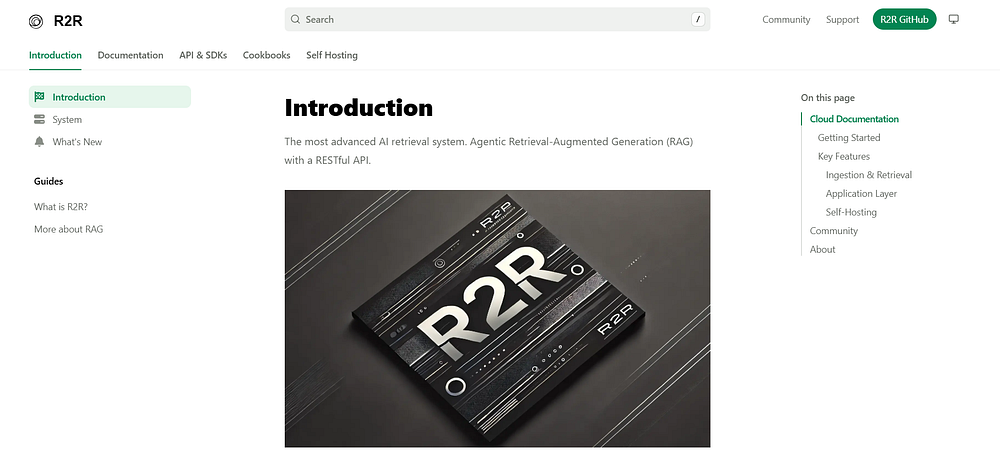
R2R: https://r2r-docs.sciphi.ai/introduction
R2R is an advanced AI retrieval system that implements agentic Retrieval-Augmented Generation (RAG) with a RESTful API, developed by SciPhi-AI.
Core Features
Agentic RAG System: Combines retrieval systems with generation capabilities to provide comprehensive responses.
RESTful API: Offers a standardized API for easy integration into various applications.
Advanced Retrieval Mechanisms: Utilizes sophisticated algorithms to fetch relevant information efficiently.
🔹Use Cases
Intelligent Search Engines
Content Generation
Research Assistance
Why Choose R2R?
Comprehensive AI Retrieval: Offers advanced retrieval capabilities, making it suitable for complex information retrieval tasks.
Easy Integration: The RESTful API design allows for seamless integration into existing systems.
Open-Source Community: Being open-source, it benefits from community contributions and continuous improvements.
Star R2R on GitHub ⭐: https://github.com/SciPhi-AI/R2R
R2R Discord Server 💬: https://discord.com/invite/p6KqD2kjtB
Here’s a Quick Recap (only for you) 🙈
Below is a table that contains the list of all the RAG Frameworks mentioned in this blog:
| Framework | Key Features | Use Cases | Why Choose It? |
| LLMWare | End-to-end RAG pipeline, hybrid search, multi-LLM support | Enterprise search, document Q&A, knowledge retrieval | Highly optimized for unstructured data processing |
| LlamaIndex | Data connectors, structured retrieval, adaptive chunking | RAG-based chatbots, document search, financial/legal data analysis | Strong ecosystem with integrations and indexing optimizations |
| Haystack | Modular RAG, retrievers, rankers, scalable inference | Enterprise AI assistants, Q&A systems, contextual document search | Powerful for production-ready search applications |
| Jina AI | Neural search, multi-modal data, vector indexing | AI-powered semantic search, image/video/text retrieval | Scalable and fast for AI-driven search solutions |
| Cognita | RAG with knowledge graphs, retrieval re-ranking | AI-driven knowledge graphs, intelligent document search | Advanced retrieval using structured and unstructured data |
| RAGFlow | Graph-enhanced retrieval, hybrid search, deep document processing | Legal, finance, research document retrieval | Enterprise-ready, scalable, optimized for structured search |
| txtAI | Lightweight RAG, embeddings-based retrieval, easy deployment | Document similarity search, lightweight search engines | Fast and simple RAG for developers needing flexibility |
| STORM | Multi-hop retrieval, knowledge synthesis, LLM chaining | AI-driven research assistants, contextual understanding | Optimized for complex knowledge retrieval tasks |
| LLM-App | Fast streaming RAG, parallel retrieval, scalable indexing | Live AI chatbots, customer support automation | Efficient RAG with fast response time for high-load applications |
| Neurite | Multi-agent reasoning, multi-modal retrieval | Research assistance, AI-powered document analysis | Supports multi-modal inputs and collaborative AI reasoning |
| R2R | Reasoning-based retrieval, automated knowledge extraction | Scientific document processing, in-depth Q&A | Tailored for complex and logical reasoning in RAG |
But wait, Why can’t we use LangChain over RAG Frameworks??
While LangChain is a powerful tool for working with LLMs, it is not a dedicated RAG framework. Here’s why a specialized RAG framework might be a better choice:
LangChain helps connect LLMs with different tools (vector databases, APIs, memory, etc.), but it does not specialize in optimizing retrieval-augmented generation (RAG).
LangChain provides building blocks for RAG but lacks advanced retrieval mechanisms found in dedicated RAG frameworks.
LangChain is good for prototypes, but handling large-scale document retrieval or enterprise-level applications often requires an optimized RAG framework.
Conclusion: Choosing the right framework 😉
With a variety of open-source RAG frameworks available — each optimized for different use cases — choosing the right one depends on your specific needs, scalability requirements, and data complexity.
If you need a lightweight and developer-friendly solution, frameworks like txtAI or LLM-App are great choices.
For enterprise-scale, structured retrieval, LLMWare, RAGFlow, LlamaIndex, and Haystack offer robust performance.
Jina AI and Neurite are well-suited for the task if you focus on multi-modal data processing.
For reasoning-based or knowledge graph-powered retrieval, Cognita, R2R, and STORM stand out.
Finally, we are at the end of the blog. I hope you found it insightful. Please save it for the future. Who knows, when you need it!
Follow me on Github: https://github.com/RS-labhub
Thank you so much for reading! You’re the most beautiful person I’ve ever met. I have a lot of trust in you. Keep believing in yourself, and one day you will become a source of motivation for others. 💖


